


Venice Faces Possible UNESCO Downgrade as It Struggles To Manage Mass Tourism 

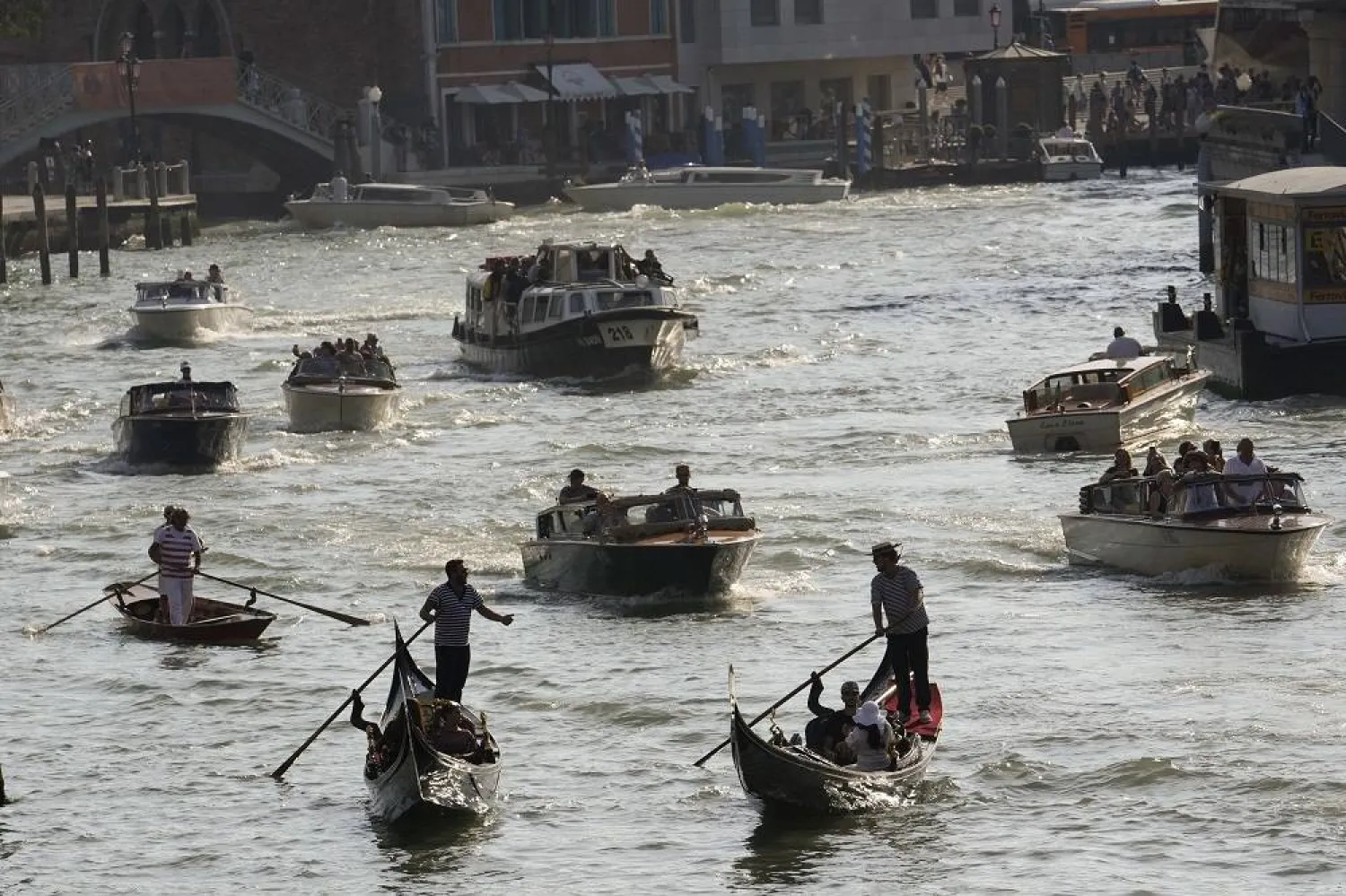
A view of boats and gondolas on a canal, in Venice, Italy, Wednesday, Sept. 13, 2023. (AP)
TT

Venice Faces Possible UNESCO Downgrade as It Struggles To Manage Mass Tourism 

A view of boats and gondolas on a canal, in Venice, Italy, Wednesday, Sept. 13, 2023. (AP)

A scowling gondoliere ferrying sightseers 10 at a time across the mouth of Venice's Grand Canal scolds passengers to sit still and frets over being shorted the bargain 2-euro fare.

The brief journey perched along the sides of a packed gondola is a far cry from romantic scenes of gondolieres serenading couples as they ply Venice’s picturesque canals but is emblematic of the city's plunge into mass tourism.

The storied and fragile lagoon city is not alone in its struggle to manage an onslaught of tourists in the low-cost flight era. But the stakes are particularly high this week as the UNESCO World Heritage Committee decides whether to add Venice to its list of endangered world sites. A decision could come as early as Thursday.

A declassification would appear an indictment of the city’s management of tourism, after it escaped a downgrade two years ago when the Rome government enacted a ban on cruise ships off St. Mark’s Square and in the Giudecca canal.

“We are trying to avoid this,” said Michele Zuin, Venice’s top budget official. “But it is not as if we are slaves of UNESCO.”

The decision comes just days after housing activists announced over the weekend that the number of tourist beds in Venice now outnumbers the number of residents, citing official city data.

A ticker updating the number of tourist beds in a bookstore window aims to keep the alarming trend high in the minds of citizens, interplaying with another nearby that counts the dwindling number of citizens.

Tempers flew at a city council meeting this week ahead of a vote that made Venice the first city in the world to charge visitors an entrance fee. Local television clips showed the mayor and a political opponent trading heated insults over the dais as a crowd of concerned citizens overflowed into the corridor.

Critics charge that the tax was rushed through to impress the UNESCO committee that the city is acting to curb mass tourism. Visitors will be charged 5 euros a day to enter the city on 30 high-traffic days, still to be determined, in a much-truncated version of a day-tripper tax that was set to begin before the pandemic took a hit at global tourism.

UNESCO officials have emphasized that a downgrade is not meant to be punitive, but to alert the world community that more needs to be done to address issues plaguing a World Heritage site.

The recommendation to downgrade Venice cites not only management of mass tourism, but also the impact of climate change. It notes, for example, that the underwater barriers to protect Venice are not yet fully operational.

Venice is one of six sites, including two in war-ravaged Ukraine, that the committee may officially declare to be in danger.

The other at-risk sites under consideration are the Saint Sophia Cathedral in Ukraine’s capital, Kyiv; the historic center of Lviv, in western Ukraine; the ancient city of Nessebar in Bulgaria; the Diyarbakir Fortress in Türkiye; and the Kamchatka Volcanoes in Russia’s far east.



Saudi Cultural Development Fund Debuts at Davos to Showcase Culture as Economic Engine

Saudi Cultural Development Fund Debuts at Davos to Showcase Culture as Economic Engine
TT

Saudi Cultural Development Fund Debuts at Davos to Showcase Culture as Economic Engine

Saudi Cultural Development Fund Debuts at Davos to Showcase Culture as Economic Engine

The Cultural Development Fund (CDF) successfully concluded its participation at the 2026 Annual Meeting of the World Economic Forum, held from January 19 to 23 in Davos, Switzerland, marking a historic and groundbreaking presence for Saudi culture at the world’s premier economic event.

Hosted at the Saudi House, the CDF engaged over 200 international experts, including leading economists and investors, through a series of dynamic activities such as a networking breakfast, panel discussion, and beneficiary talks on the NextOn platform. The CDF emphasized culture not only as a form of artistic and creative expression, but also as a vital economic driver and a strategic pillar for national development, SPA reported.

Reinforcing this vision, CDF CEO Majed Al-Hugail highlighted in a Davos panel Saudi Arabia's belief in culture as a pivotal force for economic diversification and quality of life. By 2030, he stated, the cultural sector is set to contribute $48 billion to GDP, create more than 346,000 jobs, and attract 22 million visitors.

The CDF also underscored the critical role of financing in empowering entrepreneurship and amplifying the economic potential of the cultural sector. Notable participants in the NextOn talk series included Co-Founder of AlMashtal Creative Incubator Princess Noura bint Saud bin Naif, who addressed “Culture as Economic Infrastructure: Unlocking Human Capital Through the Creative Industries.” Additionally, CEO of the Arabian Housing & Building (AHB) Company Eng. Khalid Alhenaidy contributed insights during a session titled “The Value in Cultural Assets.”

Looking ahead, the CDF organized six strategic side meetings aimed at exploring new opportunities and fostering collaborations to accelerate the development of the Saudi cultural sector and attract global investment. It also distributed 150 copies of the comprehensive investment report, Saudi Cultural Market Outlook 2025: Vision, Impact, and Opportunities, developed in partnership with the Ministry of Culture, the Ministry of Investment, and the Invest Saudi initiative.

Furthermore, the CDF showcased Saudi creativity by exporting 60 cultural products from Samuda, a fashion-sector beneficiary brand, highlighting the growing economic significance of the Saudi fashion market.

This milestone reflects the CDF’s commitment to serving as a center of excellence and financial enabler for the Kingdom’s cultural sector. It underscores ongoing efforts to elevate Saudi culture on the global stage, maximizing its economic and social impact in alignment with the ambitious objectives of Saudi Vision 2030.


Five Artists Shortlisted for the Seventh Edition of Ithra Art Prize

The shortlisted artists are Aseel AlYaqoub (Kuwait), Bady Dalloul (Syria), Heba Y. Amin (Egypt), Ala Younis (Jordan), and Jawad Al Malhi (Palestine) - SPA
TT

Five Artists Shortlisted for the Seventh Edition of Ithra Art Prize

The shortlisted artists are Aseel AlYaqoub (Kuwait), Bady Dalloul (Syria), Heba Y. Amin (Egypt), Ala Younis (Jordan), and Jawad Al Malhi (Palestine) - SPA

The King Abdulaziz Center for World Culture (Ithra) announced the five shortlisted artists for the seventh edition of the Ithra Art Prize, which celebrates artists from or based in the 22 Arab countries.

Recognized as one of the most distinguished honors in the Middle East, the Prize is dedicated to empowering artists, fostering innovation, and deepening cultural dialogue across the Arab world.

The shortlisted artists are Aseel AlYaqoub (Kuwait), Bady Dalloul (Syria), Heba Y. Amin (Egypt), Ala Younis (Jordan), and Jawad Al Malhi (Palestine), SPA reported.

Head of Ithra’s Museum Farah Abushullaih said: “The development and expansion of the Ithra Art Prize since its launch have established it as an important platform for artistic expression.

This year’s shortlist reflects the incredible diversity, creativity, and critical thought shaping contemporary art in the Arab world. The open call received more than 500 artistic submissions, which underwent an initial review process before a selected group of works was evaluated by the jury.”

She added that the award, in its current edition, is witnessing an expansion in scope compared to previous years, as the judging panel is providing production grants to the five finalists, with their works to be showcased in a dedicated exhibition at the King Abdulaziz Center for World Culture (Ithra) during the spring of 2026.


King Salman Arabic Language Academy Launches Arabic Language Month in Mexico

The Arabic Language Month features specialized training courses, scientific and outreach activities - SPA
TT

King Salman Arabic Language Academy Launches Arabic Language Month in Mexico

The Arabic Language Month features specialized training courses, scientific and outreach activities - SPA

The King Salman Global Academy for Arabic Language launched the Arabic Language Month in Mexico as part of its international efforts to support Arabic language education for non-native speakers and strengthen its cultural and intellectual presence in global academic institutions.

The program runs throughout January and includes a variety of scientific and educational events, such as intensive training courses for teachers and learners, specialized programs for teachers of Arabic as a foreign language, a symposium on the current state and challenges of Arabic language education in Mexico, the administration of the “Hamza” academic test to assess learners’ proficiency, and organized scientific and cultural visits, SPA reported.

Implemented in cooperation with key institutions in Mexico, the program targets teachers, learners, and anyone interested in teaching Arabic as a foreign language.

The Arabic Language Month features specialized training courses, scientific and outreach activities, and active participation from the academy leaders in academic events. It aims to enhance institutional and scientific collaboration, expand international partnerships, and advance the academy’s mission of promoting Arabic language education worldwide.